
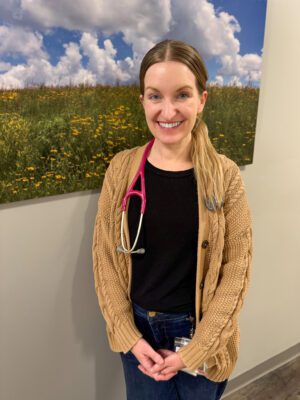
I work as a family doctor at Smith County Family Practice, but before that, I’m a mom to four young girls. My days are full of ponytails, bruised knees, bedtime prayers, and cereal bowls left on the counter. I also spend time in exam rooms, looking at medical charts, and having tough talks with families who never thought they’d be asking me, “How did this happen?”
Today, I’m writing not only as a doctor, but as a parent who loves her children deeply and wants them to grow up strong, healthy, and hopeful.
In North Central Kansas and all over the country, we’re seeing something heartbreaking. Substance use and thoughts of suicide are appearing in younger and younger kids. These are children who still play with toys, still need help tying their shoes, and should be dreaming about their future, not questioning if life is worth living.
 As a doctor, I see the numbers. As a mom, I feel how heavy they are. And as a person of faith, I believe God wants us to face this moment with strength, wisdom, and love.
Many of us grew up in homes where things like drugs, depression, and suicide were hardly ever talked about. Our parents thought avoiding these topics would keep us safe. But now we know that staying silent doesn’t protect our kids. Talking with them does.
Kids are already hearing about these things on social media, at school, from friends, and on their phones. If we’re not talking to them, someone else will, and not everyone cares about their well-being.
Difficult conversations don’t have to be harsh. You can start them simply by asking, “Have you ever heard kids talking about vaping or drugs?” or “If you ever feel really sad or overwhelmed, you can always tell me,” or “Some people use substances when they’re hurting. Let’s talk about healthier ways to handle big feelings.”
You don’t need to say everything perfectly. What matters is having a receptive heart and being ready to listen. Start early, be gentle, stay present, and keep showing up for your child.
One of the most harmful things our kids can believe is, “If I’m struggling, something is wrong with me.” That’s not true. Feeling sad isn’t a weakness. Feeling anxious isn’t failure. Asking for help isn’t something to be ashamed of.
When we talk openly about mental health, we show our kids that it’s safe to feel, it’s okay to struggle, and they are never alone.
Kids speak up when they feel safe. A safe home tells them: you won’t get in trouble for telling the truth, I love you no matter what, and we’ll face hard things together. When kids believe this, they talk and talking can save lives.
At Smith County Family Practice, and in collaboration with the Smith County Drug and Alcohol Council, we work every day to support families. But we can’t do it alone. Healthcare, education, and programs all help, but nothing is more important than a parent who truly knows their child.
Every night, I remind myself: my job isn’t to raise perfect kids, but to make sure they know they’re deeply loved and can talk to me about anything, even the hardest topics. Start the conversation, ask the questions, and open the door. It could save your child’s life. There is no greater calling than this.
 “The Conversations that Can Save a Life” by Dr. Leah Wiehl is one in a series of articles written in collaboration with the Smith County Drug and Alcohol Council, who work alongside community partners to create a better community through connection, education, and prevention.