
Take Charge of Your Heart: A Guide to the DASH Diet

Hello, and welcome to Take Charge of Your Heart: A Guide to the DASH Diet! Our names are Kali Hagans and Ashlyn Sims and we are Kansas State University students currently pursuing our masters degrees in Food, Nutrition, and Health and Registered Dietitian credentials. You may recognize us from interning with Chef Steve, RD, LD, at the Hometown Cafe and Smith County Memorial Hospital. Some of you may have helped us complete a survey on September 1st, 2026 in which we asked the public how familiar they are with the DASH diet and how comfortable they are in building a balanced meal at home. The responses to this survey helped us identify an opportunity for a community wide nutrition education project regarding the DASH diet.
You may be asking yourself why is it important to know about the DASH diet? Well the answer is right here in Chef Steve’s Hometown Cafe. If you have ever taken a look at Chef Steve’s menu descriptions, you may recognize some key phrases such as “the sauce will easily fit into a moderate diet like the DASH diet,”
“nutrient parameters associated with a diet like the DASH diet,” or “you can fit that into the DASH diet.” Chef Steve aims to model the nutrients in his meal with the goals of the DASH diet such as low sodium and high fiber. The DASH diet is a heavily researched heart healthy nutrition intervention that is associated with higher compliance rates. Chef Steve preaches that DASH is a great first step on the healthy diet spectrum because it is an easier adjustment to make towards lifestyle modification.
Introducing DASH
The DASH diet, which stands for Dietary Approaches to Stop Hypertension, is an evidence-based eating pattern that emphasizes fruits and vegetables, whole grains, lean proteins and low-fat dairy while encouraging people to be mindful of sodium. These are simple principles that can support heart health and overall well-being and can be adapted to many different meals and lifestyles. The goal of implementing the DASH diet is not to ask anyone to completely change the way they eat or to follow a strict meal plan. Instead, DASH can be used to make long lasting lifestyle modifications that will help preserve your heart health.
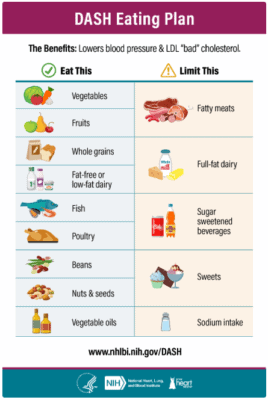 Who does the DASH diet benefit? While largely aimed towards patients with active hypertension, the DASH diet can benefit many groups of individuals with many different dietary needs. The DASH diet can be beneficial for preventative health measures, pre-hypertensive individuals, and those looking for an easy diet to implement for overall health. Because the DASH diet aligns with multiple preventative measures, (such as high fiber reducing the onset of colon cancer) it is a flexible dietary model that can be followed by all people looking to increase longevity, energy levels, and quality of life.
DASH Facts
As mentioned earlier, the DASH diet is low in sodium, higher in fiber, and prioritizes whole foods. Pictured in the previous section are the recommended daily servings of each food group based on a 2,100 calorie diet. Please note that caloric needs vary person to person meaning serving suggestions can fluctuate. An easy model to follow to accomplish these goals is the MyPlate. As seen on the right, MyPlate recommends building your plate with majority vegetables, a ½ cup serving of fruit, 3-6 oz of lean protein, 1 cup of whole grains, and a serving of low-fat/fat-free dairy (serving size varies based on product).
The DASH diet does outline specific macronutrient goals, however, tracking this on a day to day basis may be unsustainable. So, while we are going to provide the macros, the main, overarching goal, is lifestyle modification, not calorie counting. Based on a 2,100 calorie diet, 55% of daily calories are derived from carbohydrates, 18% from protein, and 27% from total fat (with no more than 6% being from saturated fat). Fiber intake is one of the most important aspects of the DASH diet, and is included in the daily carbohydrate recommendations. The recommended goal for daily fiber intake is 30 grams and, for reference, the average American only consumes approximately 15 grams. Meaning to meet the DASH goal for fiber, the average person needs to double their intake. Examples of fiber dense foods include lentils, brown rice, whole grains, legumes, seeds, berries, broccoli, fruit with skin, and brussel sprouts. Later we will talk about some ways to incorporate these foods into your everyday diet. 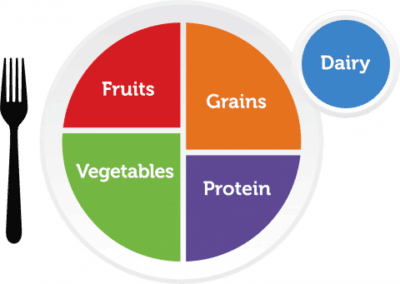
Another key goal of the DASH diet is limiting sodium intake. DASH recommends capping your sodium intake at 2,300 mg, but to even aim for below 2,000 mg. Because of the sodium-based preservatives found in processed foods, the average American consumes around 3,400 mg a day. High sodium intake is heavily correlated to high blood pressure and other heart conditions. This is why focusing on limiting sodium intake is a main pillar of hypertension prevention and treatment. A few first steps to reducing sodium include not adding table salt for seasoning, rinsing canned products such as corn and beans, and looking for no salt added labels on foods such as ketchup. More alternative seasonings, tips, and swaps will be later discussed.
Other important benchmarks in the DASH diet include potassium and calcium intake. The goal for potassium intake is 4,700 mg per day and its importance is correlated to its blood pressure lowering effect. Calcium is another important micronutrient with a goal of 1,250 mg and its effect is to help the blood vessels relax and contract properly. Lastly, while the DASH diet does not specifically outline suggestions for iron intake, it is a crucial micronutrient and should be considered in the larger picture of a healthy diet. Iron recommendations are as follows: 8 mg for men ages 19+ and for women ages 51+ and 18 mg for women ages 19-50.
 Along with a well rounded diet, exercise and sleep also play a crucial role in a healthy lifestyle. General sleep recommendations for adults ages 18-64 is 7-9 hours per night and 7-8 hours per night for adults over the age of 65. 150-300 minutes of moderate intensity physical activity per week is recommended for adults and can be organized into five 30-45 minute sessions per week. Moderate to intense physical activity includes brisk walking, swimming, or even mowing the lawn. At least two days of muscle strengthening activity per week is also recommended for best health outcomes.
DASH at Home
While implementing the principles of DASH all at once may seem intimidating, there are a few simple tools you can use from home to help begin the practice. One of the most insightful practices when choosing more nutrient dense foods is understanding how to read a nutrition label and what to look for. For the DASH diet, identifying three things on a standard nutrition label is where we want to start. This includes fiber, sodium, and saturated fat. The highlighted sections in the image to the right show where to locate these three markers. DASH encourages high fiber, low sodium, and low saturated fat. So when comparing items in the grocery store, shoot for products that follow that pattern most of the time. To reiterate, the DASH diet calls for 30 grams of fiber, less than 2,000-2,300 mg of sodium, and less than 6% of your daily fat deriving from saturated fat (based on a 2,100 calorie diet, this is no more than 13 grams a day). 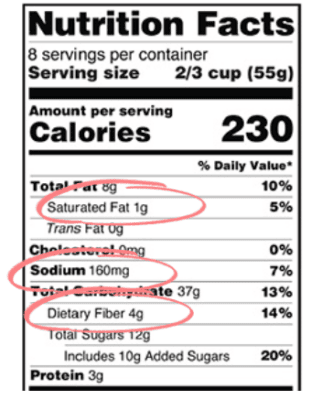
Another opportunity to decrease sodium intake is finding alternatives to table salt to season foods in the home. This may look like seasoning foods with pepper, garlic powder, lemon or lime juices, or salt free seasonings like the one pictured to the left. While DASH emphasizes a low sodium diet, it doesn’t have to mean less flavor. This can be a fun opportunity to try new flavors and get creative in the kitchen without the use of added salt.
Other DASH aligned ideas to carry into the kitchen involve cooking techniques that limit frying, oil, butter, and red meat consumption. Frying food in oil drastically increases the amount of unhealthy fats in your meals. So instead of frying, switch to baking and broiling. This way, you can still have that breaded chicken we all love so much while also maintaining your heart health. Another simple switch is to use the right oil when oil is needed. For example, olive and avocado oils are rich in antioxidants and healthy fats that have a positive impact on the heart when used in moderation. Additionally, simply using less unhealthy oils and butter can reduce your total daily intake of saturated fats. Instead of butter to soften breads, try occasionally using avocado or nut butter spreads that contain healthy fats! Red meat is another common food group that is consumed in high amounts and, unfortunately, is high in saturated fat. To preface, this does not mean we have to cut out red meat, it’s just too good to do that! What we can do is lower the portion size of red meat and increase our serving of vegetables. Aim for ½ a plate of veggies and a 3-6 oz serving of red meat once a day while prioritizing white meats such as chicken and turkey at other meals.
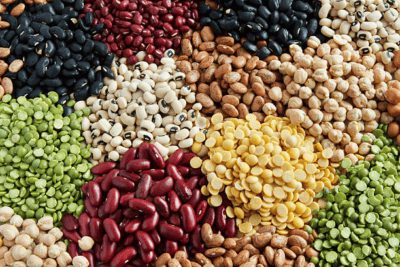
 Fiber prioritization is not only a key principle of the DASH diet, but crucial to long term health and digestion. Fiber is found in whole grains, leafy greens, beans, lentils, brown rice, berries, vegetables, nuts, and seeds. Incorporating these items into your daily meals and snacks doesn’t have to be challenging. This may look like adding blueberries to your morning oatmeal or cereal, grabbing a handful of nuts or seeds for a snack, or mixing in lentils and beans with ground meat at dinner time. This may also look like choosing a whole wheat option for bread instead of white or adding in vegetables into your soup that won’t change the overall flavor but will simply add nutrients, color, and texture. Incorporating fiber into your diet can be an opportunity to try new foods, experiment with different textures and flavors, and place emphasis on adding food into your diet rather than subtracting. To start, aim for adding at least one fiber source into all three meals and building a plate full of color that incorporates many different sources of nutrients.
 Putting it All Together
As we learned, the DASH diet is great for hypertension treatment and prevention, however, it is also an overall healthy diet/lifestyle for everyone. This means that anyone can follow the model of the DASH diet, not just those who have been diagnosed with elevated or high blood pressure. Following a diet like DASH can improve your overall health and wellbeing by prioritizing fruits, vegetables, lean proteins, fiber, and healthy fats especially when you know a variety of strategies, like the ones we discussed, to help you implement these into your everyday life.
The most important aspects of DASH to prioritize include limiting saturated fat intake, decreasing sodium, and increasing fiber. When you think about focusing on those three aspects, the rest will likely follow. It is also important to note, however, that DASH is not temporary, it is all about focusing on lifestyle modification. This includes eating 3 nutritious meals a day and being mindful of when and what you eat. Try to limit distractions while you eat so not only your body, but also your mind can digest what you are consuming. Food is not just fuel, it is also social, psychological, and something that can bring us all together. Putting all these aspects together forms habits that determine your future health outcomes. So make it a priority to add color to your plate, go on a short daily walk, eat your whole grains, and challenge yourself!